
Why Japan’s Cars Are So Overwhelmingly Japanese
More than 90% of new passenger cars registered in Japan in 2025 came from a Japanese automaker.
The reasons include tiny, yellow-plated cars and the nature of Japan’s streets and parking lots. At least, that is likely what Japanese car brands would say.
If you find yourself in traffic while in Japan, don’t play I Spy. At least not if you’re hoping to use many letters beyond T, H, or N when naming cars.
Groups of Toyotas, Hondas and Nissans will glide past like schools of fish, along with plenty of small, boxy things from the likes of Suzuki and Daihatsu. But if you’re counting on the M’s, P’s, F’s and so on from cars from European or US manufacturers, you might have to wait a while.
A home advantage, measured
Japan registered about 3.84 million new passenger cars in 2025, counting both standard and small cars and the miniature kei class. About 241,000 came from foreign makers. That leaves Japanese brands with roughly 94%.
“Imported” does not necessarily mean “foreign” here. Of the 354,642 vehicles imported in 2025, 111,513 were Japanese makers’ own products, built overseas. Mercedes-Benz topped the brand table for imports with 50,857, but second and third places went to Suzuki (43,266) and Honda (37,022), according to preliminary figures from the Japan Automobile Importers Association.
This leads to the question, how do the figures compare with other countries that have big carmakers?
Market, 2025 | Estimated Home share |
Japan | 93.7% |
Germany | 52.1% |
France | 39.3% |
United States | 38–39% |
While it is hard to do a complete apples-to-apples comparison because of the different vehicle definitions and statistical information, it is easy to spot the gap.
America offers a sharp contrast – and insight into some of the gripes that other car manufacturing countries have about Japan. Toyota, Honda, Nissan, Subaru and Mazda represent 35.5% to 36.6% of new vehicle sales in the US. Five Japanese companies, in other words, come close to matching Detroit on Detroit’s home turf.
Built behind a wall
At home, domestic makers’ head start tracks back to 1955. Japan, short of foreign currency and keen to protect its carmakers, largely banned imports of foreign cars for ordinary buyers. Imports resumed in limited numbers in 1960 and passenger cars were liberalised in October 1965, but behind tariffs of 35% to 40%. While the levels varied tariffs first disappeared in 1978.
It would be strange if those sheltered years had left no mark, since domestic firms had time to grow before foreign rivals could compete on equal terms.
However, in the half century since, Japanese automakers have continue to dominate domestic sales. Some of the reasons why centre on tiny engines and taxes.
The little yellow-plate economy
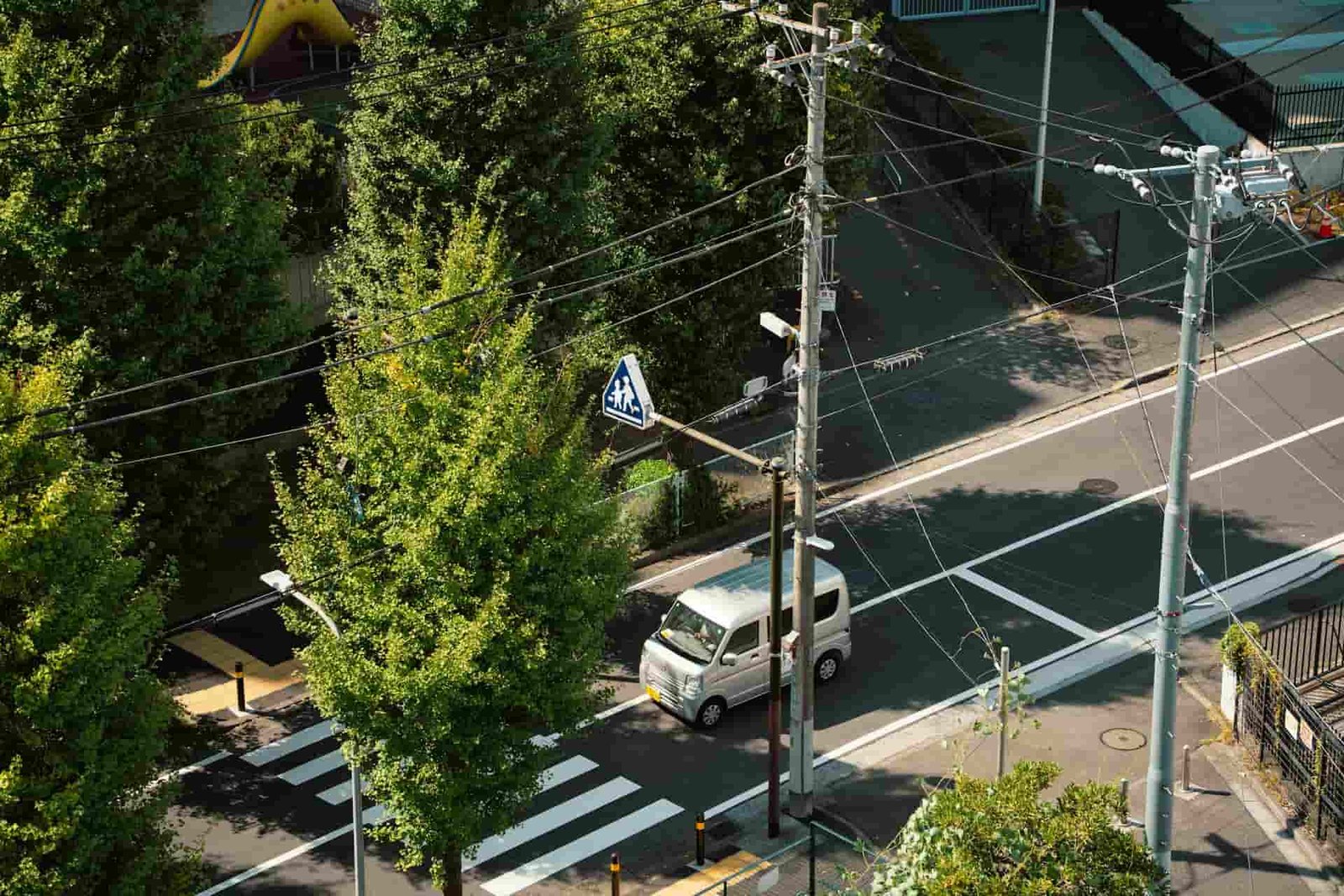
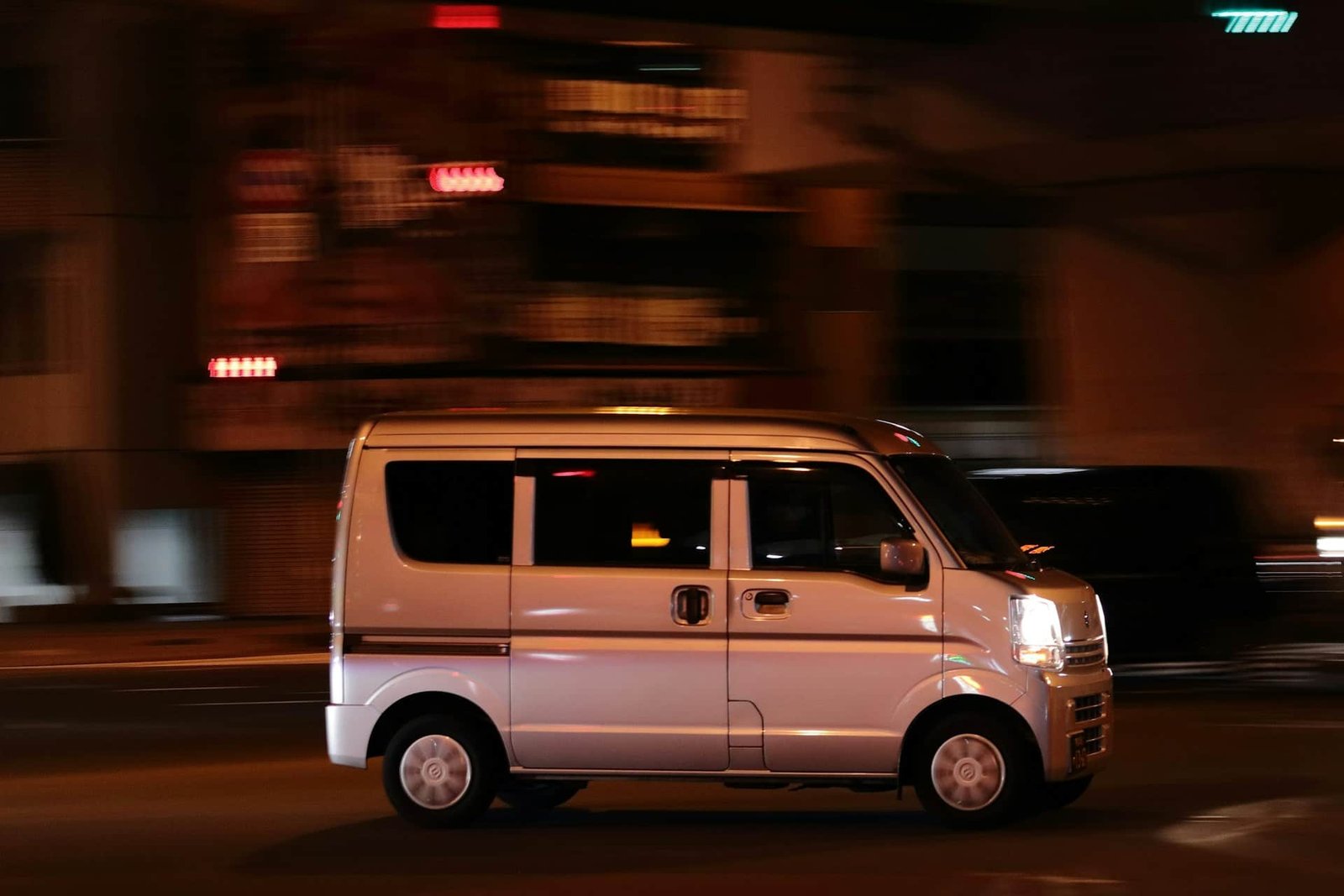
Go anywhere in Japan, and you will find incarnations of kei cars (軽自動車, kei jidōsha, literally “light automobile”). They tend to look like an oversized toy car you could pull back by the roof and it would whirr down the road once you let go. But don’t be fooled by its tiny engine (often just 660cc) and, usually, yellow number plates.
Kei cars are central to Japan, and in accounted for about 1.3 million new passenger cars, around 34% of the total sold.
Policy sweetens the deal. A new private kei passenger car attracts ¥10,800 a year in kei vehicle tax, rising to ¥12,900 after 13 years. A new private car with a 1.0 to 1.5-litre engine pays ¥30,500.
Then there is parking. Owners of larger cars generally need a police-issued parking-space certificate (車庫証明, shako shōmei, or “garage certificate”). Kei owners need only file a notification (届出, todokede), and some areas do not require even that. In Tokyo the certificate costs ¥2,400 at the counter and takes three to seven days, while the notification is free.
The results are most striking, especially outside the capital. At the end of 2025 Japan had a record 54.58 kei four-wheelers per 100 households, including trucks and vans. Nagano had 104.5, better than one per household; Tokyo had 12.2.
Locked door or wrong key?
On 25 November 2026 the Office of the US Trade Representative published a report on Japanese manufacturing, alongside proposed new tariffs. Its verdict on cars was blunt: “Japan’s automotive market remains largely inaccessible for U.S. and other foreign automotive companies.”
It notes that non-Japanese brands take well below 10% % of new vehicle sales and points to non-tariff barriers, including limited opportunities to comment on new rules and obstacles to building sales and service networks.
Stephanie Brinley of Mobility Global observed that US makers had less reason to object on these ground and had made no significant push for mass-market sales in Japan for well over a decade. She concluded that
Of course, being no worse off than other foreign brands does beg the question whether Japanese brands’ position is just down to factors like left-hand drive, strong loyalty to domestic brands, and tax and compliance costs.
Is it a matter of fit?
So, what is the answer to why car imports remain below where they stood 30 years ago, when Japan took in 427,525 imported vehicles in 1996 with 324,973 of them from foreign makers?
Several factors stand out.
One reason is definitely the deep service and parts networks Japanese brands have across the country, which have been in place for decades, of not half a century.
Japanese brands, led by Toyota, are renowned for durability and longevity, providing another strong reason to buy local.
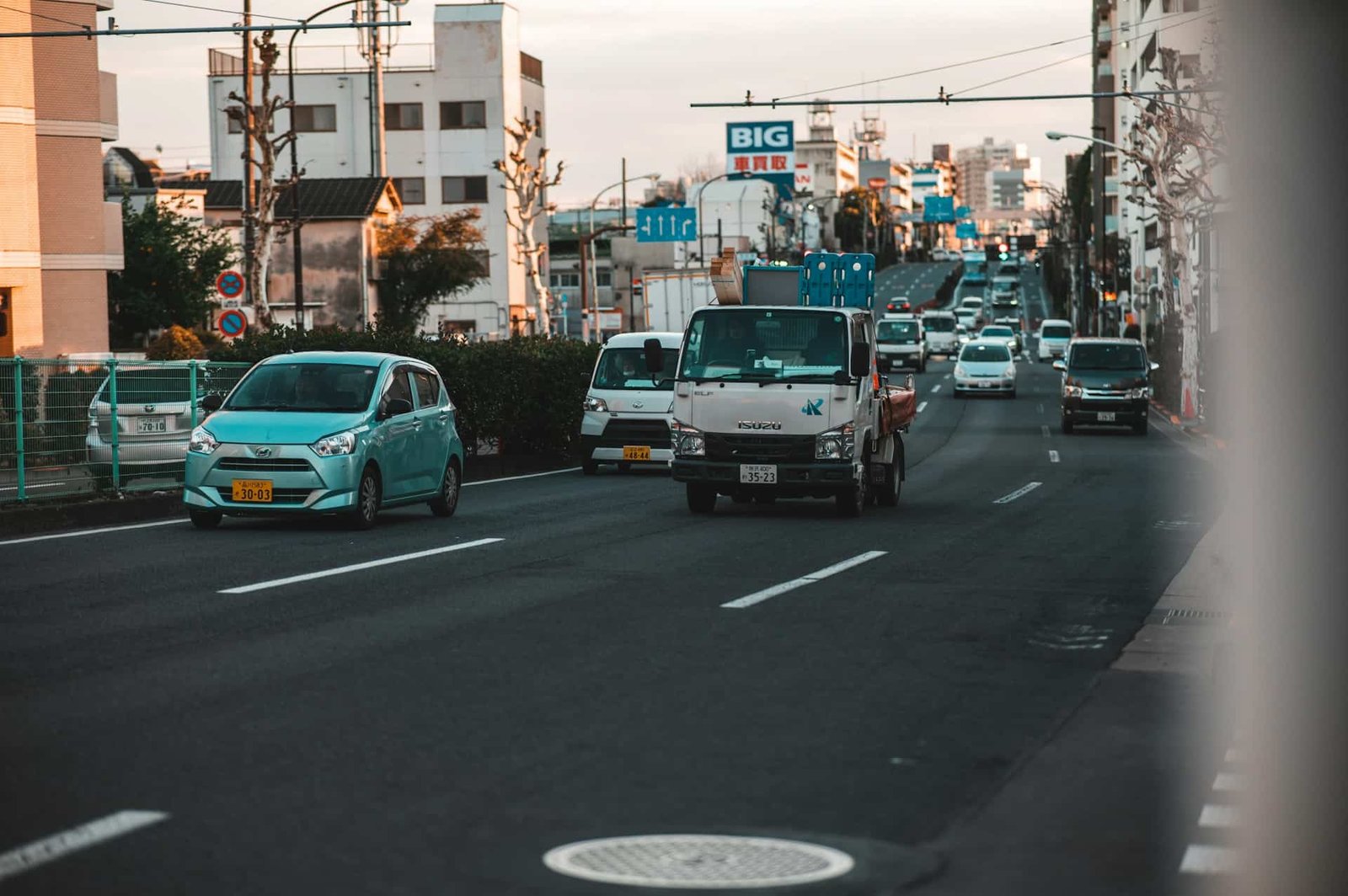
Another factor that should not be overlooked is the nature of Japan and its roads and parking. About 22% of the length of national and prefectural roads had a roadway narrower than 5.5 meters (18 feet). And almost all of these are two-way streets. For reference, a standard US highway lane is 12 feet wide (3.65 metres).
Playing to the homefield advantage
This all lets Japan and its automakers off too lightly in my opinion.
I do think there is some validity to the words of Ford’s Japan spokesman who in connection with the brand pulling back from Japan in January 2016 called it “the most closed, developed auto economy in the world.”
Kei cars are another sore point. There is an argument to be made for it being a tax-favoured category specifically because it can work as a non-tariff barrier. Foreign companies are free to build for it, but that means designing a car largely for one country.
Nor can narrow roads and quality settle the question. Of the 2.53 million new non-kei passenger cars registered in 2025, about two-thirds were in the larger “regular” category, so plenty of Japanese buyers want more than a small car. Add In J.D. Power’s 2026 U.S. dependability study, meanwhile, owners reported fewer problems with Buick, a General Motors brand, than with Toyota. Fit and reputation help explain the home side’s lead, but they cannot show on their own that it was won on a level field.
Without proof, it becomes an opinion, but I think a major reason is simple Japanese pride in its car industry along with decades embedded on the local level. Like other brands, Japan’s car manufacturers have long had their local show rooms and garages all across Japan, including in small towns and even villages. While this is not necessarily the case any more, it does provide them with a historic connection with a population that is proud to support the country’s companies. It doesn’t hurt that they make some of the best cars in the world and fit the unique nature of Japan and its road system.
Photos: