
Why Music Rings from the Subway to the Shotengai in Japan
From train platforms to shopping arcades, Japan is a country of sounds.
The music you hear doesn’t just accompany daily life, it structures it.
The person who runs the public speakers in our local Shotengai (Japanese shopping street) grew up in the 80s. I know this because so did I, and I can recognise every single song as I make my way along it from the station toward home.
On Tuesday, I walked to Madonna’s Like a Prayer. On Wednesday, to Toto’s Africa. This is by no means a local phenomenon. Pretty much any shopping street you entre to will have some sort of ambient soundtrack playing.
Walk through Japanese cities around 5 p.m. and songs drift from loudspeakers mounted on utility poles. At closing time, something that sounds a lot like Auld Lang Syne rings out of storefronts. Step onto a Tokyo train platform and a jingle tells you which train is departing (and what station you are on).
In Japan, sounds and music area more than ambient decoration. They are part of the infrastructure that has a profound effect on what is happening. Take the train jingles, for example, which have reduced passenger injuries by 25%.
The train station songs
Train stations are usually the first place visitors encounter Japan’s unique soundscape.
The story of that starts in 1971. Back then, trains leaving were not accompanied by a soft song but a grating buzzer sound that would turn most people into panicking hamsters.
Shirō Muraoka, president of one of Japan’s many train lines, saw the issue and suggested that the buzzer sound be replaced with music. In stepped composer Mutsurō Kimura, credited with creating the first hassha melody (発車メロディ, “departure melody. It worked, but the idea took almost twenty years to really catch on.
In March 1989, JR East commissioned Yamaha to develop a new system for Shinjuku and Shibuya stations alerting passengers that a train was about to leave. The melodies featured calming tones: piano, bells, and harp, each lasting precisely seven seconds.
That duration was no accident. Railway engineers determined that seven seconds gave passengers enough warning to board without triggering mad dashes for the closing doors. A later study at Tokyo Station confirmed it had worked: rush-related passenger injuries dropped by 25% after the melody implementation.
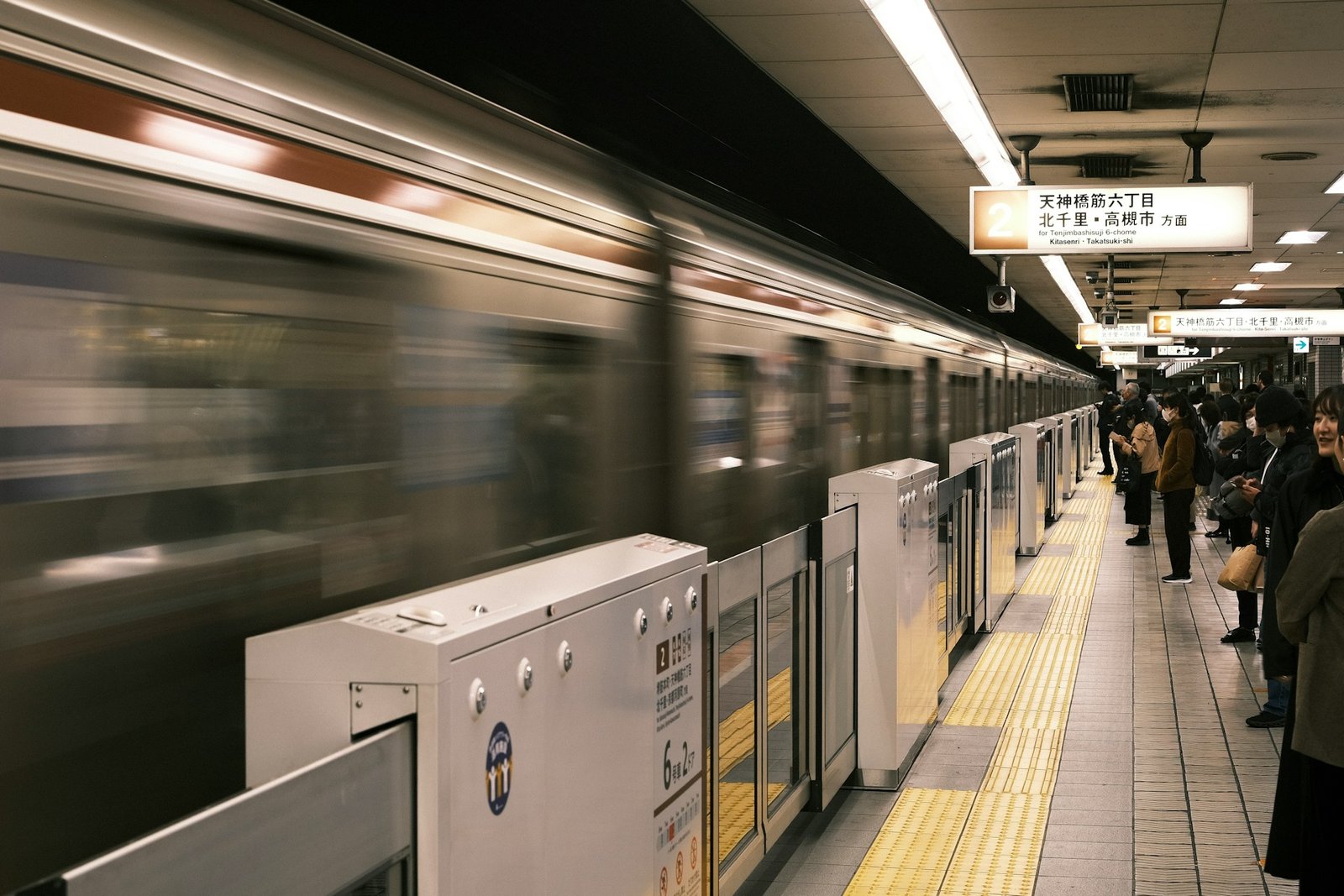
The unknown train station composer
Today, JR East alone uses over 400 distinct departure melodies. More than 150 are gotōchi hassha melody (ご当地発車メロディ), or local departure melodies, that reflect the character of specific stations.
Takadanobaba plays the Astro Boy theme, honouring manga creator Osamu Tezuka’s nearby studio. Ebisu Station (my local stop) uses a jingle from Yebisu beer commercials, nodding to the brewery that once operated there. The company’s headquarters is still located close to the station.
The composer behind many of these melodies has a strong claim on the tile of most well-known musician in Japan that no one would recognise on the street. Minoru Mukaiya, former keyboardist for jazz-fusion band Casiopea, has composed approximately 170 station melodies, becoming statistically one of the most-played musicians on Earth.
His melodies include overtones, the multiple frequencies that give temple bells their resonant, non-abrasive quality. Even when layered over station announcements and crowd noise, the tones remain distinct without becoming irritating. They calm without sedating, alert without alarming. I’m not saying Tokyo stations will necessarily put you in a meditative mood, but imagine the tunes replaced with a buzzer that sounds like a fire alarm’s angrier cousin.
The 5 o'clock song
Station melodies are about movement through space. Japan’s municipal chime system works differently. It structures movement through time. Every day, usually at 5 p.m. (the exact hour varies by municipality), loudspeakers on utility poles play 30 to 60 seconds of music.
The system’s formal name reveals its purpose: bōsai gyōsei musen (防災行政無線), or “disaster prevention administrative radio.” These loudspeakers, found in about 90% of Japanese municipalities, form a nationwide emergency broadcast network capable of transmitting warnings in as little as seven seconds. The daily 5 p.m. broadcast is a kind of systems check.
The network emerged from tragedy. Following the 1964 Niigata earthquake, the Japanese government began installing municipal speaker systems. Rather than test them with sirens that would jangle nerves daily, officials chose to use soothing melodies.
The most common song is “Yūyake Koyake” (夕焼け小焼け, “Red, Red Sunset”), a children’s song from 1919 that describes the end of the school day and the journey home. It became a natural signal for children to leave playgrounds before dark.
The systems are well-loved but not without critics. At 85 decibels measured at 50 meters, roughly the volume of a freight train passing nearby, the broadcasts can feel intrusive, particularly to those living closest to the poles.
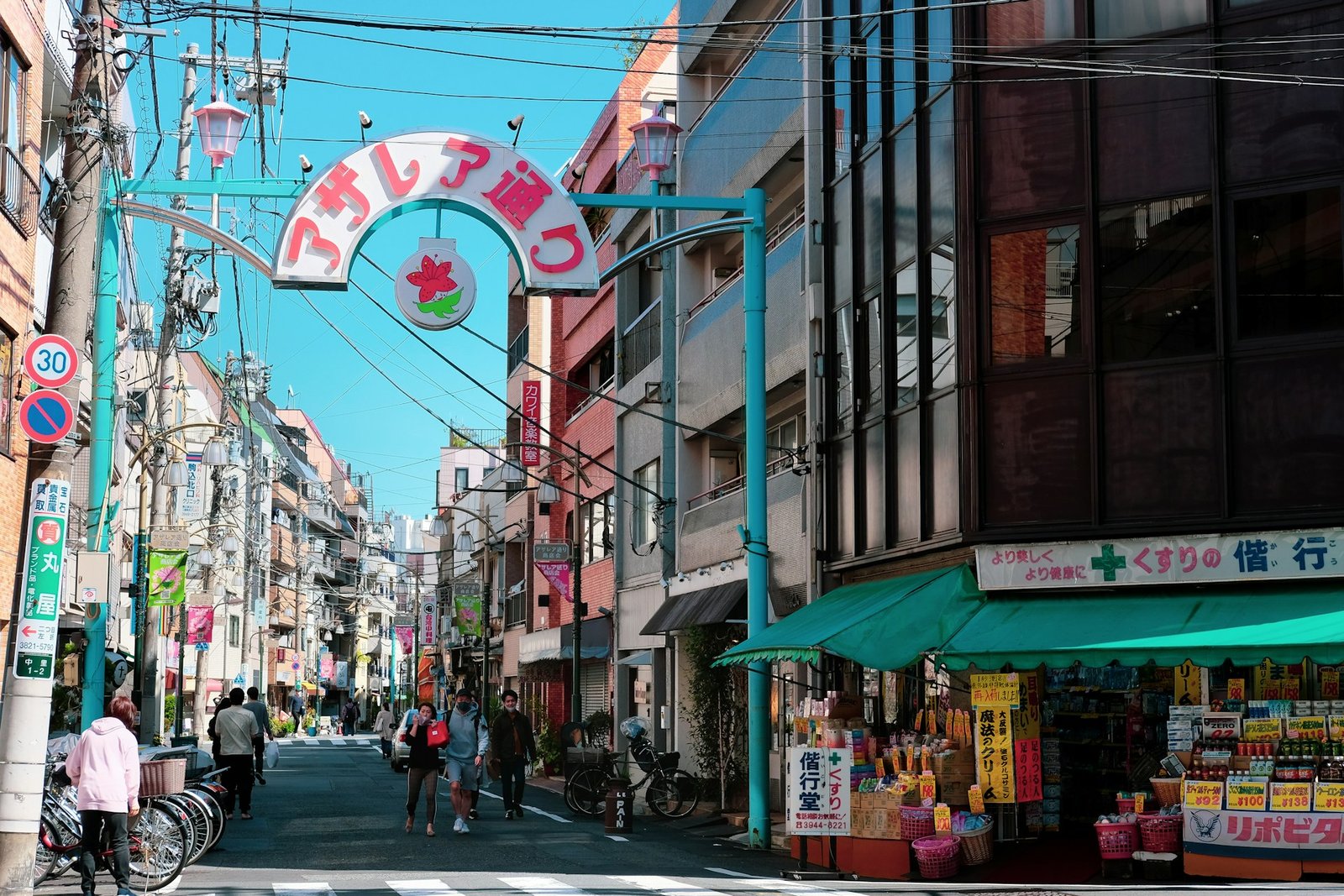
Shopping streets’ boogie
While trains and disaster systems use music functionally, Japan’s shōtengai (商店街) deploy it commercially. An estimated 15,000 shotengai operate across Japan, and many use music to define their acoustic territory. The logic is simple: music means shopping. When it stops, you are entering a residential area.
Nakano Sun Mall, a 224-meter covered arcade north of Tokyo’s Nakano Station, is a good example. The playlist shifts throughout the day to nudge behaviour. Morning melodies energise commuters passing through. Evening tunes slow the pace, encouraging browsing. The approach draws from retail psychology research showing that tempo affects how long people stay and how much they spend.
Academic research supports this. A 2023 study by urban sociologist Matsui Koichi at Osaka Metropolitan University found that shotengai music “defines acoustic territory and reinforces community identity,” creating sonic boundaries between commercial and residential areas.
When sound tradition meets tourism
Not everyone gets Japan’s sonic infrastructure, a fact that has become increasingly clear as tourism has grown.
In June 2024, discount chain Daiso (Japan’s Poundland or Dollar Store, but exponentially better) announced it would stop playing “Hotaru no Hikari” (蛍の光) as its closing-time music across thousands of stores.
The song shares its melody with “Auld Lang Syne” and has signalled closing time in Japanese stores and workplaces for decades. Some companies have even adopted it as a gentle nudge for employees to head home at the end of the day.
The problem is that none of this translates to foreign tourists, who associate the tune with New Year’s celebrations rather than closing time. So they keep shopping, well past the point the staff want to leave.
That tension sits at the heart of Japan’s musical infrastructure, and a broader issue that I think lies at the heart of many Japanese issue with foreigners in general and tourists in particular: it depends on shared, unspoken cultural literacy. The system works seamlessly when everyone understands the code. When they don’t, it breaks down.
The future of shared sound structures
What makes Japan’s approach distinctive isn’t just the presence of music in public space. Other countries use audio cues too. What sets Japan apart is the systematic embedding of music into infrastructure, and the cultural acceptance that surrounds it.
Western urban planning tends to treat sound as pollution to be minimised. Japan treats it as information to be organised. The distinction runs deeper than policy. It reflects fundamentally different assumptions about shared space and collective responsibility.
It can be argued that Japanese society exhibits an unusual tolerance for “informational sound” because it is understood as serving collective rather than individual interests.
That framing may frustrate some residents and baffle many visitors. But it also produces something quietly remarkable: millions of people unconsciously synchronising their days to music they have never consciously noticed: a feat of social engineering, dressed up as civic amenity.
Photos: